
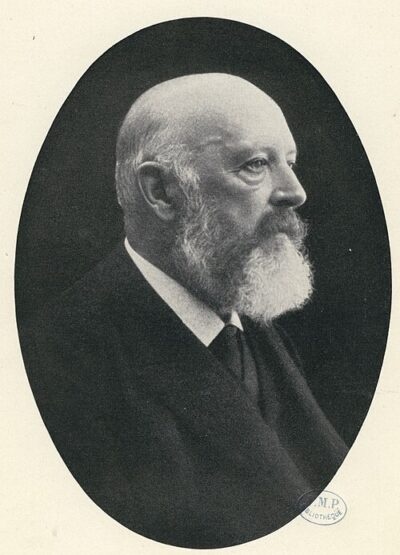
Adolf von Baeyer
Adolf von Baeyer was a German chemist. Born October 31, 1835, in Berlin. Died August 20, 1917, in Starnberg. Educated at Humboldt-Universität zu Berlin and LMU Munich. Awards include Pour le Mérite for Sciences and Arts order, Nobel Prize in Chemistry and Elliott Cresson Medal.
Facts
47 facts · 2 confirmed by two sources · 13 cited · 31 from one source · 1 where the sources disagree
What’s different
- Died in: we show Starnberg (Sources disagree). Wikidata also lists Munich
Where this comes from
Papalocal keeps its own record. It started from these sources; what each one said is kept here as it was copied, so a change on their side never changes this page by itself. Tap one to read its version.
What Wikidata says · copied November 16, 2026 · revision 2568120406
- Described as
- German chemist (1835-1917)
- Other names
- Adolf Baeyer, Johann Friedrich Wilhelm Adolf von Baeyer
- Born
- October 31, 1835 · 15 references
- Died
- August 20, 1917 · 16 references
- Born in
- Berlin · 5 references
- Died in
- Starnberg · 3 references; Munich · 1 reference
- Buried in
- Munich Waldfriedhof
- Name at birth
- Johann Friedrich Wilhelm Adolf von Baeyer
- Citizen of
- German Empire; Germany · 1 reference
- Occupation
- chemist · 1 reference; university teacher
- Worked for
- LMU Munich; Humboldt-Universität zu Berlin; University of Strasbourg · 1 reference
- Education
- Humboldt-Universität zu Berlin; LMU Munich; Heidelberg University; Ghent University · 1 reference; Friedrich-Wilhelms-Gymnasium
- Member of
- Royal Society of London; Göttingen Academy of Sciences and Humanities in Lower Saxony; Saint Petersburg Academy of Sciences; Royal Swedish Academy of Sciences; American Academy of Arts and Sciences; Russian Academy of Sciences; Royal Prussian Academy of Sciences; Bavarian Academy of Sciences and Humanities; National Academy of Sciences (1898–); Academy of Sciences of Turin (1885–) · 1 reference
- Awards
- Pour le Mérite for Sciences and Arts order; Nobel Prize in Chemistry (1905) · 2 references; Elliott Cresson Medal (1912) · 1 reference; Bavarian Maximilian Order for Science and Art (1891); Liebig Medal (1903) · 1 reference; Davy Medal (1881) · 1 reference; Fellow of the American Academy of Arts and Sciences; Foreign Member of the Royal Society (1885) · 1 reference; honorary member of the Physics Association (Frankfurt am Main, Germany) (1905)
- Field
- organic chemistry; mathematics · 1 reference; physics · 1 reference; chemistry · 1 reference
- Spouse
- Adelheid Bendemann
- Children
- Otto von Baeyer; Hans Ritter von Baeyer
- Father
- Johann Jacob Baeyer · 1 reference
- Mother
- Eugenie Baeyer
- Religion
- Lutheranism
- Wikipedias with a page
- 79
Wikidata item Q57078 (wikidata.org/wiki/Q57078), public domain (CC0). Copied November 16, 2026.
What Wikipedia says · copied November 16, 2026 · revision 1382319060
Johann Friedrich Wilhelm Adolf von Baeyer (German: [ˈaːdɔlf fɔn ˈbaɪɐ] ; 31 October 1835, Berlin – 20 August 1917, Starnberg) was a German chemist who synthesized indigo and developed a nomenclature for cyclic compounds (that was subsequently extended and adopted as part of the IUPAC organic nomenclature). He was ennobled in the Kingdom of Bavaria in 1885 and was the 1905 recipient of the Nobel Prize in Chemistry.
- Born, in its opening lines
- October 31, 1835
- Died, in its opening lines
- August 20, 1917
From the Wikipedia article “Adolf von Baeyer” (en.wikipedia.org/wiki/Adolf_von_Baeyer), by its contributors, under CC BY-SA 4.0 (creativecommons.org/licenses/by-sa/4.0/). Copied November 16, 2026; not changed.
Confirmed Two sources agree. Cited One source, and it names where it got it. One source One source, without a reference of its own. Sources disagree The sources disagree. We show the best-supported value and keep theirs below.
