
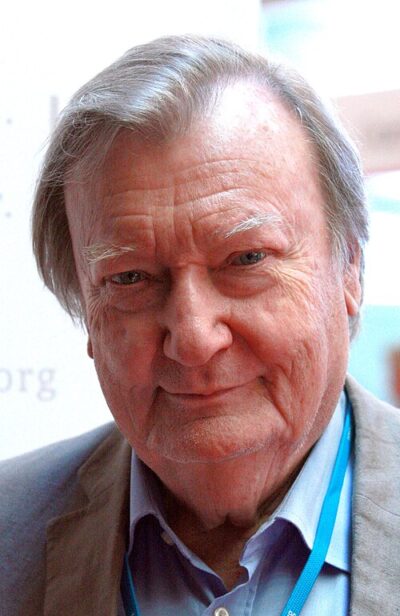
Carlo Rubbia
Carlo Rubbia is an Italian particle physicist. Born March 31, 1934, in Gorizia. Positions held include Italian senator for life (2013–) and Director General of CERN (1989–1993). Educated at Columbia University and University of Pisa. Awards include Knight Grand Cross of the Order of Merit of the Italian Republic, Nobel Prize in Physics and Officer of the Legion of Honour.
Facts
38 facts · 1 confirmed by two sources · 24 cited · 13 from one source
Where this comes from
Papalocal keeps its own record. It started from these sources; what each one said is kept here as it was copied, so a change on their side never changes this page by itself. Tap one to read its version.
What Wikidata says · copied November 16, 2026 · revision 2563199724
- Described as
- Italian particle physicist
- Born
- March 31, 1934 · 5 references
- Born in
- Gorizia · 1 reference
- Citizen of
- Italy
- Occupation
- physicist · 1 reference; politician · 1 reference; engineer; nuclear physicist · 1 reference
- Positions held
- Italian senator for life (2013–) · 1 reference; Director General of CERN (1989–1993)
- Political party
- independent politician · 1 reference
- Worked for
- Harvard University; University of Pavia · 1 reference
- Education
- Columbia University; University of Pisa; Scuola Normale Superiore
- Member of
- Pontifical Academy of Sciences (1985–) · 1 reference; Russian Academy of Sciences (1988–) · 3 references; European Academy of Sciences (2004–) · 3 references; Royal Society of London (1984–) · 3 references; National Academy of Sciences (1987–) · 3 references; Accademia Nazionale delle Scienze detta dei XL (1984–) · 2 references; American Academy of Arts and Sciences (1975–) · 2 references; Polish Academy of Sciences (1991–) · 4 references; Croatian Academy of Sciences and Arts (1992–) · 2 references; Hungarian Academy of Sciences (1993–) · 1 reference
- Awards
- Knight Grand Cross of the Order of Merit of the Italian Republic (1984) · 2 references; Nobel Prize in Physics (1984) · 2 references; Officer of the Legion of Honour (1989) · 1 reference; Dirac Medal for the Advancement of Physics (1989) · 1 reference; Royal Society Bakerian Medal (1985) · 1 reference; honorary doctor of the China University of Mining and Technology (2011) · 1 reference; Foreign Member of the Royal Society (1984) · 1 reference; Commander of the Cross of the Order of Merit of the Republic of Poland; honorary doctor of the Pontifical Catholic University of Chile; honorary doctorate from the Pontifical Catholic University of Peru; honorary doctorate from University of Savoie-Mont-Blanc (1999) · 1 reference; honorary doctorate from University of Bordeaux-I (1996) · 1 reference
- Field
- particle physics
- Wikipedias with a page
- 76
Wikidata item Q187199 (wikidata.org/wiki/Q187199), public domain (CC0). Copied November 16, 2026.
What Wikipedia says · copied November 16, 2026 · revision 1383263860
Carlo Rubbia (Italian: [ˈkarlo ˈrubbja]; born 31 March 1934) is an Italian particle physicist and inventor who shared the Nobel Prize in Physics in 1984 with Simon van der Meer for work leading to the discovery of the W and Z particles at CERN.
- Born, in its opening lines
- March 31, 1934
From the Wikipedia article “Carlo Rubbia” (en.wikipedia.org/wiki/Carlo_Rubbia), by its contributors, under CC BY-SA 4.0 (creativecommons.org/licenses/by-sa/4.0/). Copied November 16, 2026; not changed.
Confirmed Two sources agree. Cited One source, and it names where it got it. One source One source, without a reference of its own. Sources disagree The sources disagree. We show the best-supported value and keep theirs below.
