
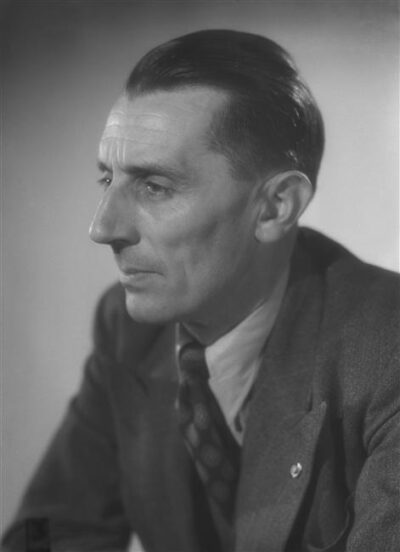
Frédéric Joliot-Curie
Frédéric Joliot-Curie was a French scientist. Born March 19, 1900, in 16th arrondissement of Paris. Died August 14, 1958, in Saint-Antoine Hospital. Positions held include director general of the National Center for Scientific Research (1944–1946), president (1946–1949) and high commissioner for atomic energy (1945–1950). Educated at Lycée Lakanal and ESPCI Paris, PSL University. Awards include Commander of the Legion of Honour, Nobel Prize in Chemistry and honorary doctor of the Jagiellonian University of Krakow.
Facts
63 facts · 2 confirmed by two sources · 23 cited · 38 from one source
Where this comes from
Papalocal keeps its own record. It started from these sources; what each one said is kept here as it was copied, so a change on their side never changes this page by itself. Tap one to read its version.
What Wikidata says · copied November 16, 2026 · revision 2568257060
- Described as
- French scientist (1900-1958)
- Other names
- Frederic Joliot, Frédéric Joliot, Frederic Joliot-Curie, Jean Frederic Joliot, Jean Frédéric Joliot
- Born
- March 19, 1900 · 14 references
- Died
- August 14, 1958 · 14 references
- Born in
- 16th arrondissement of Paris · 2 references
- Died in
- Saint-Antoine Hospital · 1 reference
- Buried in
- Cemetery Sceaux · 2 references
- Cause of death
- liver disease
- Name at birth
- Jean Frédéric Joliot
- Citizen of
- France
- Occupation
- nuclear physicist; chemist · 1 reference; professor · 1 reference; politician; university teacher; physicist · 2 references; French resistance fighter; actor · 1 reference
- Positions held
- director general of the National Center for Scientific Research (1944–1946); president (1946–1949); high commissioner for atomic energy (1945–1950); docent; professor (1938–1957) · 1 reference
- Political party
- French Communist Party · 1 reference
- Worked for
- Collège de France (1937–1958) · 1 reference; Science Faculty of Paris; Alternative Energies and Atomic Energy Commission (1945–1950)
- Education
- Lycée Lakanal; ESPCI Paris, PSL University; Science Faculty of Paris
- Member of
- Royal Society of London (1946–); German Academy of Sciences at Berlin; French Academy of Sciences (1943–) · 1 reference; Russian Academy of Sciences (1947–) · 1 reference; Hungarian Academy of Sciences; Polish Academy of Sciences; Royal Netherlands Academy of Arts and Sciences · 1 reference; National Front (1941–); Académie Nationale de Médecine; Temporary Consultative Assembly (1944–1945) · 1 reference
- Awards
- Commander of the Legion of Honour (1946) · 1 reference; Nobel Prize in Chemistry (1935) · 2 references; honorary doctor of the Jagiellonian University of Krakow; Hughes Medal (1947) · 1 reference; Matteucci Medal (1932) · 1 reference; Order of the Cross of Grunwald, 3rd class; International Stalin Prize for Peace; Foreign Member of the Royal Society (1946) · 1 reference; honorary doctor of the Maria Curie-Skłodowska University (1950); honorary doctor of the University of Warsaw; honorary doctor of the University of Łódź (1949); Commander with Star of the Order of Polonia Restituta; Work Flag Order, 1st class · 1 reference; Knight of the Legion of Honour (1935) · 1 reference; Officer of the Legion of Honour (1938) · 1 reference
- Field
- nuclear physics; natural science · 1 reference; physics · 1 reference; chemistry · 1 reference; radiobiology · 1 reference
- Spouse
- Irène Joliot-Curie (1926–) · 2 references
- Children
- Pierre Joliot; Hélène Langevin-Joliot · 1 reference
- Religion
- atheism
- Lived in
- Antony · 1 reference
- Wikipedias with a page
- 80
Wikidata item Q150989 (wikidata.org/wiki/Q150989), public domain (CC0). Copied November 16, 2026.
What Wikipedia says · copied November 16, 2026 · revision 1384154857
Jean Frédéric Joliot-Curie (French: [fʁedeʁik ʒɔljo kyʁi]; né Joliot; 19 March 1900 – 14 August 1958) was a French chemist and physicist who received the 1935 Nobel Prize in Chemistry with his wife, Irène Joliot-Curie, for their discovery of induced radioactivity. They were the second married couple, after his parents-in-law, to win the Nobel Prize, adding to the Curie family legacy of four Nobel Prizes. Joliot-Curie and his wife also founded the Orsay Faculty of Sciences, part of the Paris-Saclay University.
- Born, in its opening lines
- March 19, 1900
- Died, in its opening lines
- August 14, 1958
From the Wikipedia article “Frédéric Joliot-Curie” (en.wikipedia.org/wiki/Frédéric_Joliot-Curie), by its contributors, under CC BY-SA 4.0 (creativecommons.org/licenses/by-sa/4.0/). Copied November 16, 2026; not changed.
Confirmed Two sources agree. Cited One source, and it names where it got it. One source One source, without a reference of its own. Sources disagree The sources disagree. We show the best-supported value and keep theirs below.
