
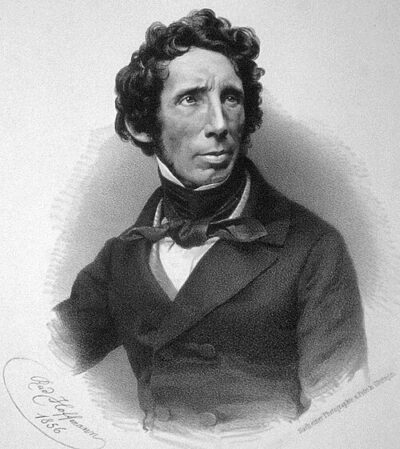
Friedrich Wöhler
Friedrich Wöhler was a German chemist. Born July 31, 1800, in Eschersheim. Died September 23, 1882, in Göttingen. Educated at University of Marburg and Heidelberg University. Awards include Copley Medal, Pour le Mérite for Sciences and Arts order and Cothenius Medal.
Facts
36 facts · 2 confirmed by two sources · 6 cited · 28 from one source
Where this comes from
Papalocal keeps its own record. It started from these sources; what each one said is kept here as it was copied, so a change on their side never changes this page by itself. Tap one to read its version.
What Wikidata says · copied November 16, 2026 · revision 2568910685
- Described as
- German chemist (1800-1882)
- Born
- July 31, 1800 · 9 references
- Died
- September 23, 1882 · 10 references
- Born in
- Eschersheim · 1 reference
- Died in
- Göttingen · 5 references
- Buried in
- Göttingen City Cemetery · 1 reference
- Citizen of
- Kingdom of Prussia; Electorate of Hesse; Landgraviate of Hesse-Kassel; German Empire
- Occupation
- chemist · 1 reference; university teacher; biochemist · 1 reference
- Worked for
- University of Göttingen; Gewerbeschule (1825–1831)
- Education
- University of Marburg; Heidelberg University
- Member of
- Royal Society of London; Royal Swedish Academy of Sciences; Göttingen Academy of Sciences and Humanities in Lower Saxony; Saint Petersburg Academy of Sciences; Hungarian Academy of Sciences; American Academy of Arts and Sciences; Bavarian Academy of Sciences and Humanities; Russian Academy of Sciences; Royal Prussian Academy of Sciences; German Academy of Sciences Leopoldina
- Awards
- Copley Medal (1872) · 1 reference; Pour le Mérite for Sciences and Arts order; Cothenius Medal (1880); Bavarian Maximilian Order for Science and Art (1853); Knight of the Legion of Honour; Foreign Member of the Royal Society (1854) · 1 reference; honorary member of the Physics Association (Frankfurt am Main, Germany) (1839)
- Field
- chemistry
- Children
- August Wöhler; Emilie Wöhler · 1 reference
- Wikipedias with a page
- 69
Wikidata item Q58575 (wikidata.org/wiki/Q58575), public domain (CC0). Copied November 16, 2026.
What Wikipedia says · copied November 16, 2026 · revision 1382977099
Friedrich Wöhler FRS(For) HonFRSE (German: [ˈvøːlɐ]; 31 July 1800 – 23 September 1882) was a German chemist known for his work in both organic and inorganic chemistry, being the first to isolate the chemical elements beryllium and yttrium in pure metallic form. He was the first to prepare several inorganic compounds, including silane and silicon nitride.
Wöhler is also known for seminal contributions in organic chemistry, in particular, the Wöhler synthesis of urea. His synthesis of the organic compound urea in the laboratory from inorganic substances contradicted the belief that organic compounds could only be produced by living organisms due to a "life force" known as vitalism. However, the exact extent of Wöhler's role in diminishing the belief in vitalism is considered by some to be questionable.
- Born, in its opening lines
- July 31, 1800
- Died, in its opening lines
- September 23, 1882
From the Wikipedia article “Friedrich Wöhler” (en.wikipedia.org/wiki/Friedrich_Wöhler), by its contributors, under CC BY-SA 4.0 (creativecommons.org/licenses/by-sa/4.0/). Copied November 16, 2026; not changed.
Confirmed Two sources agree. Cited One source, and it names where it got it. One source One source, without a reference of its own. Sources disagree The sources disagree. We show the best-supported value and keep theirs below.
