
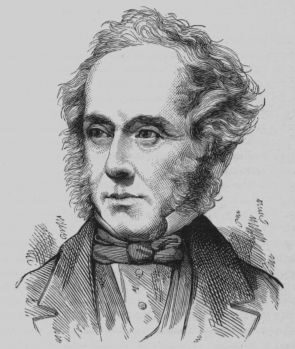
Henry Temple, 3rd Viscount Palmerston
Henry Temple, 3rd Viscount Palmerston was a British statesman and prime minister. Born October 20, 1784, in Broadlands. Died October 18, 1865, in Brocket Hall. Positions held include Prime Minister of the United Kingdom (1855–1865), Leader of the Opposition (1858–1859) and Home Secretary (1852–1855). Educated at University of Edinburgh and Harrow School. Awards include Fellow of the Royal Society, Knight Grand Cross of the Order of the Bath and Order of the Garter.
Facts
40 facts · 2 confirmed by two sources · 15 cited · 23 from one source
Where this comes from
Papalocal keeps its own record. It started from these sources; what each one said is kept here as it was copied, so a change on their side never changes this page by itself. Tap one to read its version.
What Wikidata says · copied November 16, 2026 · revision 2562947389
- Described as
- British statesman and prime minister (1784–1865)
- Other names
- Henry John Temple, Viscount Palmerston, Lord Palmerston, Henry John Temple
- Born
- October 20, 1784 · 8 references
- Died
- October 18, 1865 · 8 references
- Born in
- Broadlands
- Died in
- Brocket Hall
- Buried in
- Westminster Abbey
- Citizen of
- United Kingdom of Great Britain and Ireland; Kingdom of Great Britain (–1801)
- Occupation
- politician · 1 reference
- Positions held
- Prime Minister of the United Kingdom (1855–1865) · 1 reference; Leader of the Opposition (1858–1859); Home Secretary (1852–1855); Secretary of State for Foreign and Commonwealth Affairs (1846–1851); Member of the Privy Council of the United Kingdom; member of the 19th Parliament of the United Kingdom (1865) · 1 reference; member of the 18th Parliament of the United Kingdom (1859–1865) · 2 references; member of the 17th Parliament of the United Kingdom (1857–1859) · 2 references; member of the 16th Parliament of the United Kingdom (1852–1857) · 2 references; member of the 15th Parliament of the United Kingdom (1847–1852) · 2 references; member of the 14th Parliament of the United Kingdom (1841–1847) · 2 references; member of the 13th Parliament of the United Kingdom (1837–1841) · 2 references; member of the 12th Parliament of the United Kingdom (1835–1837) · 2 references; member of the 11th Parliament of the United Kingdom (1832–1834) · 2 references; member of the 4th Parliament of the United Kingdom (1807–1812) · 1 reference
- Political party
- Whigs (1830–1859); Tories (–1830); Liberal Party (1859–)
- Worked for
- University of Glasgow
- Education
- University of Edinburgh; Harrow School; St John's College; University of Cambridge · 1 reference
- Member of
- Royal Society of London (1853–); Travellers Club
- Awards
- Fellow of the Royal Society; Knight Grand Cross of the Order of the Bath; Order of the Garter · 1 reference
- Spouse
- Emily Temple, Viscountess Palmerston (1839–) · 2 references
- Father
- Henry Temple, 2nd Viscount Palmerston · 1 reference
- Mother
- Mary Mee · 2 references
- Religion
- Anglicanism
- Wikipedias with a page
- 70
Wikidata item Q193656 (wikidata.org/wiki/Q193656), public domain (CC0). Copied November 16, 2026.
What Wikipedia says · copied November 16, 2026 · revision 1385538287
Henry John Temple, 3rd Viscount Palmerston (20 October 1784 – 18 October 1865), known as Lord Palmerston, was an Anglo-Irish nobleman and statesman who was Prime Minister of the United Kingdom from 1855 to 1858 and from 1859 to his death in 1865. A member of the Tory, Whig and Liberal parties, Palmerston was also the first Liberal prime minister. An ideologue of free trade and a major sponsor of the Opium Wars against the Chinese Empire and the war against Egypt, he dominated British foreign policy from 1830 to 1865 when Britain stood at the height of its imperial power.
In 1802, Temple succeeded to his father's Irish peerage as the 3rd Viscount Palmerston. This Irish peerage did not entitle him to a seat in the House of Lords and Temple became a Tory MP in the House of Commons in 1807. From 1809 to 1828, he was Secretary at War, organising the finances of the army. He was Foreign Secretary from 1830–1834, 1835–1841 and 1846–1851, responding to a series of conflicts in Europe.
In 1852, Palmerston became Home Secretary in the government of the Earl of Aberdeen. As home secretary, Palmerston enacted various social reforms, although he opposed electoral reform. When Aberdeen's coalition fell in 1855 over its handling of the Crimean War, Palmerston was the only man able to sustain a majority in Parliament, and he became prime minister. He had two periods in office, 1855–1858 and 1859–1865, before his death in 1865 at the age of 80 years. Palmerston is considered to have been the "first truly popular" prime minister. He remains the most recent British prime minister to die in office.
Palmerston masterfully controlled public opinion by stimulating British nationalism. He was distrusted by Queen Victoria and most of the political leadership, but he received and sustained the favour of the press and the populace. Historians rank Palmerston as one of the greatest foreign secretaries, due to his handling of great crises, and commitments to the balance of power and British interests. His policies in relation to India, China, Italy, Belgium and Spain had extensive long-lasting beneficial consequences for Britain. However, Palmerston's leadership during the Opium Wars was questioned and denounced by other prominent statesmen. The consequences of the conquest of India have also been reconsidered with time.
- Born, in its opening lines
- October 20, 1784
- Died, in its opening lines
- October 18, 1865
From the Wikipedia article “Henry John Temple, 3rd Viscount Palmerston” (en.wikipedia.org/wiki/Henry_John_Temple,_3rd_Viscount_Palmerston), by its contributors, under CC BY-SA 4.0 (creativecommons.org/licenses/by-sa/4.0/). Copied November 16, 2026; not changed.
Confirmed Two sources agree. Cited One source, and it names where it got it. One source One source, without a reference of its own. Sources disagree The sources disagree. We show the best-supported value and keep theirs below.
