
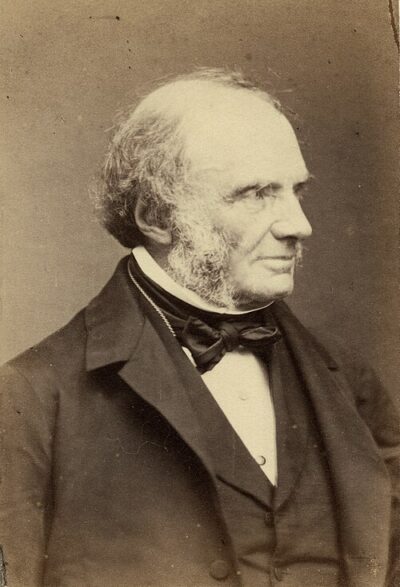
John Russell, 1st Earl Russell
John Russell, 1st Earl Russell was a Prime Minister of the United Kingdom, 1846–1852 and 1865–1866. Born August 18, 1792, in Mayfair. Died May 28, 1878, in Pembroke Lodge. Positions held include Prime Minister of the United Kingdom (2 times) (1846–1866), Leader of the Opposition (4 times) (1834–1868) and Secretary of State for Foreign and Commonwealth Affairs (1859–1865). Educated at University of Edinburgh and Westminster School. Awards include Knight Grand Cross of the Order of St Michael and St George, Knight of the Garter and Fellow of the Royal Society.
Facts
54 facts · 2 confirmed by two sources · 22 cited · 30 from one source
Where this comes from
Papalocal keeps its own record. It started from these sources; what each one said is kept here as it was copied, so a change on their side never changes this page by itself. Tap one to read its version.
What Wikidata says · copied November 16, 2026 · revision 2567556300
- Described as
- Prime Minister of the United Kingdom, 1846–1852 and 1865–1866 (1792–1878)
- Other names
- Lord John Russell, Finality John, John, Earl Russell, John Russell, Earl Russell
- Born
- August 18, 1792 · 9 references
- Died
- May 28, 1878 · 10 references
- Born in
- Mayfair · 1 reference
- Died in
- Pembroke Lodge · 1 reference
- Buried in
- Church of St Michael, Chenies · 1 reference
- Citizen of
- Kingdom of Great Britain; United Kingdom of Great Britain and Ireland
- Occupation
- politician · 1 reference
- Positions held
- Prime Minister of the United Kingdom (2 times) (1846–1866); Leader of the Opposition (4 times) (1834–1868); Secretary of State for Foreign and Commonwealth Affairs (1859–1865); Secretary of State for the Colonies (1855) · 1 reference; Lord President of the Council (1854–1855); Secretary of State for War and the Colonies (1839–1841) · 1 reference; Home Secretary (1835–1839); Member of the Privy Council of the United Kingdom; member of the 18th Parliament of the United Kingdom (1859–1861) · 1 reference; member of the 17th Parliament of the United Kingdom (1857–1859) · 2 references; member of the 16th Parliament of the United Kingdom (1852–1857) · 2 references; member of the 15th Parliament of the United Kingdom (1847–1852) · 2 references; member of the 14th Parliament of the United Kingdom (1841–1847) · 2 references; member of the 13th Parliament of the United Kingdom (1837–1841) · 2 references; member of the 12th Parliament of the United Kingdom (1835–1837) · 2 references
- Political party
- Whigs (–1868); Liberal Party (1868–1878) · 1 reference
- Worked for
- University of Glasgow
- Education
- University of Edinburgh; Westminster School · 1 reference
- Member of
- Bavarian Academy of Sciences and Humanities; Royal Society of London (1847–); Royal Statistical Society; Royal Historical Society; Privy Council of the United Kingdom
- Awards
- Knight Grand Cross of the Order of St Michael and St George; Knight of the Garter; Fellow of the Royal Society
- Spouse
- Frances Russell, Countess Russell (1841–) · 3 references; Adelaide Lister (1835–) · 2 references
- Children
- Rollo Russell · 2 references; John Russell, Viscount Amberley · 1 reference; Lady Agatha Russell · 1 reference; Lady Georgiana Russell · 2 references; Lady Victoria Russell · 2 references; George Gilbert William Russell · 1 reference
- Father
- John Russell, 6th Duke of Bedford · 1 reference
- Mother
- Georgiana Byng · 2 references
- Siblings
- Louisa Hamilton, Duchess of Abercorn; Francis Russell, 7th Duke of Bedford; Lord George Russell · 1 reference; Lord Alexander Russell; Lord Charles Russell; Lord Edward Russell; Lord Francis Russell
- Religion
- Church of England
- Wikipedias with a page
- 62
Wikidata item Q157259 (wikidata.org/wiki/Q157259), public domain (CC0). Copied November 16, 2026.
What Wikipedia says · copied November 16, 2026 · revision 1381602967
John Russell, 1st Earl Russell (18 August 1792 – 28 May 1878), known as Lord John Russell before 1861, was a British Whig and Liberal statesman who was Prime Minister of the United Kingdom from 1846 to 1852 and again from 1865 to 1866.
The third son of the 6th Duke of Bedford, Russell was educated at Westminster School and Edinburgh University before entering Parliament in 1813. In 1828 he took a leading role in the repeal of the Test Acts which discriminated against Catholics and Protestant dissenters. He was one of the principal architects of the Reform Act 1832, which was the first major reform of Parliament since the Restoration, and a significant early step on the road to democracy and away from rule by the aristocracy and landed gentry. He favoured expanding the right to vote to the middle classes and enfranchising Britain's growing industrial towns and cities, but he never advocated universal suffrage and he opposed the secret ballot. Russell was outspoken on many issues over the course of his career, advocating Catholic emancipation in the 1820s, calling for the repeal of the Corn Laws in 1845, denouncing Pope Pius IX's revival of Catholic bishoprics in 1850, and supporting Italian unification during the 1860s.
Russell's ministerial career spanned four decades. In addition to his two terms as prime minister, between 1831 and 1865 he served in the cabinets of Earl Grey, Viscount Melbourne, the Earl of Aberdeen, and Viscount Palmerston. Russell's relationship with Palmerston was often stormy and contributed to bringing down Russell's first government in 1852 and Palmerston's first government in 1858. However, their renewed alliance from 1859 was one of the foundations of the united Liberal Party, which would go on to dominate British politics in the following decades. While Russell was an energetic and effective minister during the 1830s and helped to commit the Whigs to a reform agenda, he proved less successful as prime minister. During his two periods as prime minister he often suffered from a disunited cabinet and weak support in the House of Commons, meaning he was unable to carry out much of his agenda. During his first premiership, his government failed to deal effectively with the Irish Famine, a disaster that saw the loss of a quarter of Ireland's population through death and emigration. During his second premiership, he split his party by pressing for further parliamentary reform and was forced from office only to watch Derby and Disraeli carry a more ambitious Reform Bill.
- Born, in its opening lines
- August 18, 1792
- Died, in its opening lines
- May 28, 1878
From the Wikipedia article “John Russell, 1st Earl Russell” (en.wikipedia.org/wiki/John_Russell,_1st_Earl_Russell), by its contributors, under CC BY-SA 4.0 (creativecommons.org/licenses/by-sa/4.0/). Copied November 16, 2026; not changed.
Confirmed Two sources agree. Cited One source, and it names where it got it. One source One source, without a reference of its own. Sources disagree The sources disagree. We show the best-supported value and keep theirs below.
