
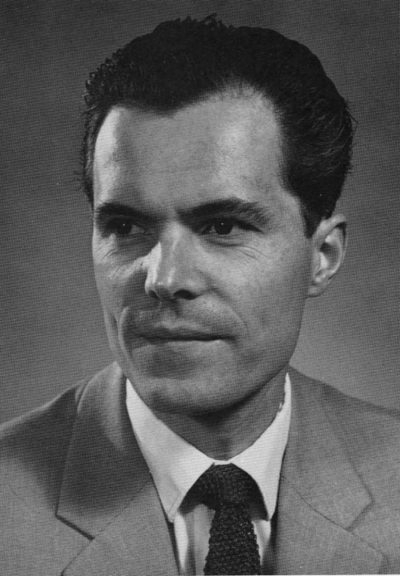
Rudolf Ludwig Mössbauer
Rudolf Ludwig Mössbauer was a German nuclear physicist and Noble Prize in Physics. Born January 31, 1929, in Munich. Died September 14, 2011, in Grünwald. Positions held include professor. Educated at Technische Universität Berlin and Technical University of Munich. Awards include Nobel Prize in Physics, Elliott Cresson Medal and Rontgen-Preis.
Facts
42 facts · 2 confirmed by two sources · 15 cited · 25 from one source
Where this comes from
Papalocal keeps its own record. It started from these sources; what each one said is kept here as it was copied, so a change on their side never changes this page by itself. Tap one to read its version.
What Wikidata says · copied November 16, 2026 · revision 2565936603
- Described as
- German nuclear physicist and Noble Prize in Physics
- Other names
- Rudolf Mössbauer, Rudolf L. Mössbauer
- Born
- January 31, 1929 · 6 references
- Died
- September 14, 2011 · 7 references
- Born in
- Munich · 3 references
- Died in
- Grünwald · 1 reference
- Buried in
- Grünwald Woodland Cemetery · 1 reference
- Citizen of
- Germany
- Occupation
- physicist · 1 reference; university teacher; nuclear physicist
- Positions held
- professor
- Worked for
- Technical University of Munich (1964–1997) · 1 reference; Technische Universität Berlin; California Institute of Technology (1960–1964) · 1 reference; Institut Laue–Langevin (1972–1977) · 1 reference
- Education
- Technische Universität Berlin; Technical University of Munich · 1 reference
- Member of
- German Academy of Sciences Leopoldina (1970–) · 2 references; Pontifical Academy of Sciences · 1 reference; National Academy of Sciences (1978–) · 1 reference; Bavarian Academy of Sciences and Humanities; Academy of Sciences of the USSR (1982–) · 1 reference; Academia Europaea (1988–) · 1 reference; American Academy of Arts and Sciences (1971–) · 1 reference; Russian Academy of Sciences; Indian National Science Academy; Accademia Nazionale delle Scienze detta dei XL
- Awards
- Nobel Prize in Physics (1961) · 2 references; Elliott Cresson Medal (1961) · 1 reference; Rontgen-Preis (1961); Bavarian Order of Merit (1962) · 1 reference; Great Cross with Star and Sash of the Order of Merit of the Federal Republic of Germany (1964); honorary doctorate from University of Lille-I (1973) · 1 reference; honorary doctorate from Joseph Fourier University (1974) · 1 reference; Guthrie Medal and Prize (1974) · 1 reference; Lomonosov Gold Medal (1984) · 1 reference; Bavarian Maximilian Order for Science and Art (1984); Albert Einstein Medal (1986); Urania Medal (1988); Pour le Mérite · 1 reference; Pour le Mérite for Sciences and Arts order; Legion of Honour · 1 reference
- Field
- physics
- Wikipedias with a page
- 76
Wikidata item Q44286 (wikidata.org/wiki/Q44286), public domain (CC0). Copied November 16, 2026.
What Wikipedia says · copied November 16, 2026 · revision 1379629615
Rudolf Ludwig Mössbauer (German: [ˈʁuːdɔlf ˈmœsˌbaʊ̯ɐ] ; 31 January 1929 – 14 September 2011) was a German physicist who shared the 1961 Nobel Prize in Physics with Robert Hofstadter for his discovery of the Mössbauer effect, which is the basis for Mössbauer spectroscopy.
- Born, in its opening lines
- January 31, 1929
- Died, in its opening lines
- September 14, 2011
From the Wikipedia article “Rudolf Mössbauer” (en.wikipedia.org/wiki/Rudolf_Mössbauer), by its contributors, under CC BY-SA 4.0 (creativecommons.org/licenses/by-sa/4.0/). Copied November 16, 2026; not changed.
Confirmed Two sources agree. Cited One source, and it names where it got it. One source One source, without a reference of its own. Sources disagree The sources disagree. We show the best-supported value and keep theirs below.
