

Imperial Russian Army
The Imperial Russian Army is a land armed force of the Russian Empire. It was founded in 1721.
- Founded
- November 2, 1721
- Country
- Russian Empire
All 7 facts, and where they come from
Facts
7 facts · 0 confirmed by two sources · 0 cited · 7 from one source
Where this comes from
Papalocal keeps its own record. It started from these sources; what each one said is kept here as it was copied, so a change on their side never changes this page by itself. Tap one to read its version.
What Wikidata says · copied November 17, 2026 · revision 2542437159
- Described as
- land armed force of the Russian Empire
- Other names
- Russian Imperial Army
- What it is
- army; armed forces
- Comes after
- Army of Peter the Great
- Followed by
- Red Army
- Founded
- November 2, 1721 · 1 reference
- Ended
- September 14, 1917
- Country
- Russian Empire
- Wikipedias with a page
- 43
Wikidata item Q1078222 (wikidata.org/wiki/Q1078222), public domain (CC0). Copied 2026-11-17.
What Wikipedia says · copied November 17, 2026 · revision 1382299248
The Imperial Russian Army (Russian: Русская императорская армия, romanized: Russkaya imperatorskaya armiya) was the army of the Russian Empire, active from 1721 until the Russian Revolution of 1917. It was organized into a standing army and a state militia. The standing army consisted of regular troops and two forces that served on separate regulations: the Cossack troops and the Muslim troops.
A regular Russian army existed before the end of the Great Northern War in 1721. During his reign, Peter the Great accelerated the modernization of Russia's armed forces, including with a decree in 1699 that created the basis for recruiting soldiers, military regulations for the organization of the army in 1716, and creating the College of War in 1718 for the army administration. Starting in 1700 Peter began replacing the older Streltsy forces with new Western-style regiments organized on the basis of his already existing Guards regiments.
After the Napoleonic Wars the active Russian Army was maintained at just over 1 million men, which was increased to 1.7 million during the Crimean War. It remained at around this level until the outbreak of World War I, at which point Russia had the largest peacetime standing army in Europe, about 1.3 million. The wartime mobilization increased this to a strength of 4.5 million, and in total 15 million men served from 1914 to 1917.
In March 1917 the Imperial Army swore loyalty to the Russian Provisional Government after the abdication of Emperor Nicholas II, though the official status of the monarchy was not resolved until September 1917, when the Russian Republic was declared. Even after the February Revolution, despite its ineffectiveness on the offensive, the majority of the army remained intact and the troops were still at the front lines. The "old army" did not begin disintegrating until early 1918.
From the Wikipedia article “Imperial Russian Army” (en.wikipedia.org/wiki/Imperial_Russian_Army), by its contributors, under CC BY-SA 4.0 (creativecommons.org/licenses/by-sa/4.0/). Copied 2026-11-17; not changed.
Confirmed Two sources agree. Cited One source, and it names where it got it. One source One source, without a reference of its own. Sources disagree The sources disagree. We show the best-supported value and keep theirs below.
Picture: Wikimedia Commons: Badge of the Russian Imperial Army.jpg · See Commons file page
People connected 40
Military branch 37
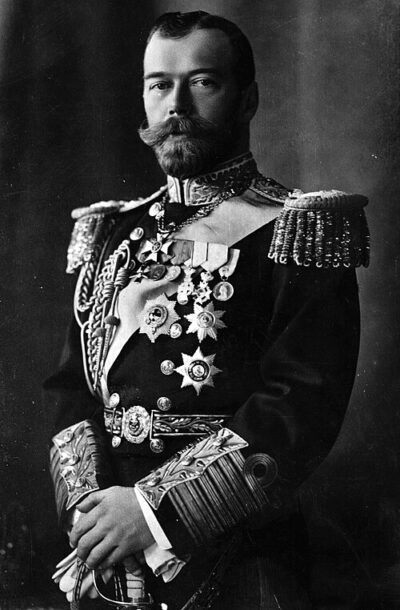 Nicholas II of Russia14th and last Emperor of Russia (1894–1917)
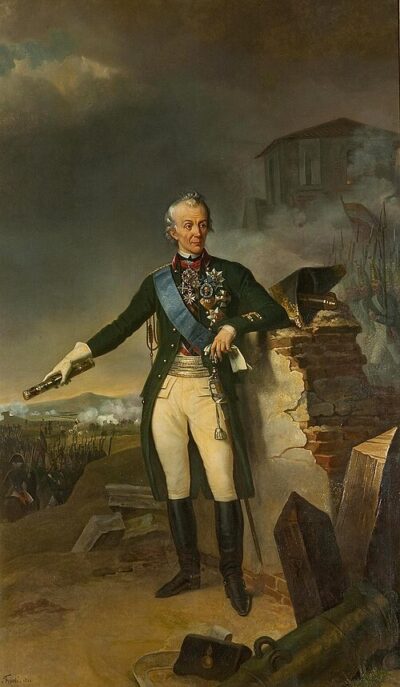 Alexander SuvorovRussian marshal (1730–1800)
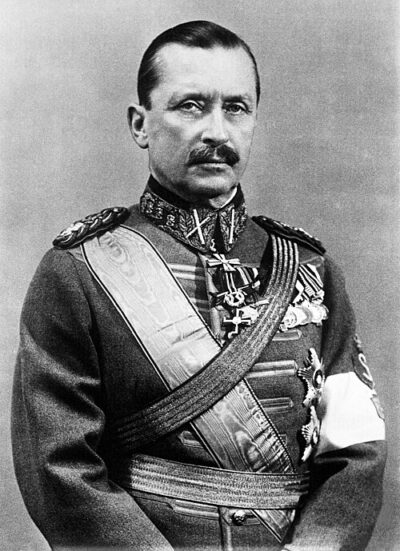 Carl Gustaf Emil Mannerheim (1887–1917)Finnish military leader and statesman (1867–1951)
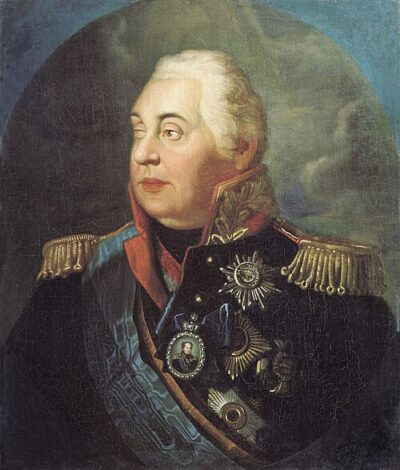 Mikhail KutuzovField Marshal of the Russian Empire (1745–1813)
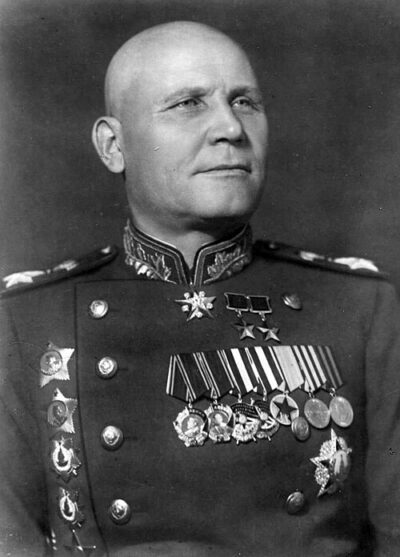 Ivan Konev (1916–)Soviet military commander (1897-1973)
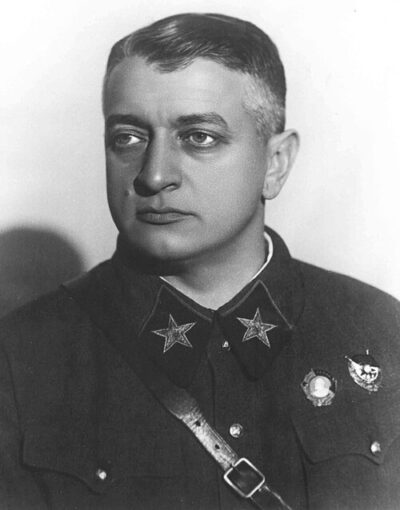 Mikhail TukhachevskyMarshal of the Soviet Union (1893—1937)
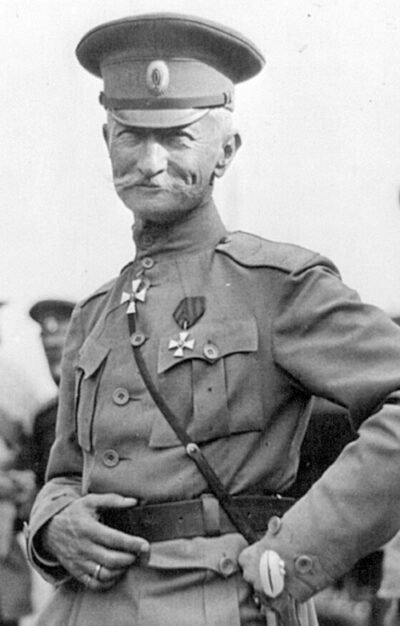 Aleksey BrusilovRussian and Soviet military commander
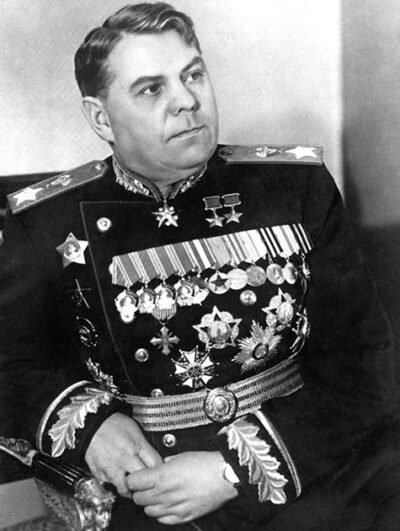 Aleksandr Michajlovič Vasilevskij (1915–1917)Marshal of the Soviet Union (1895-1977)
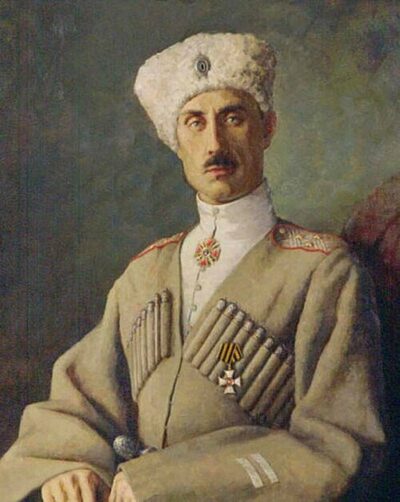 Pyotr WrangelRussian army general of Baltic German origin (1878-1928)
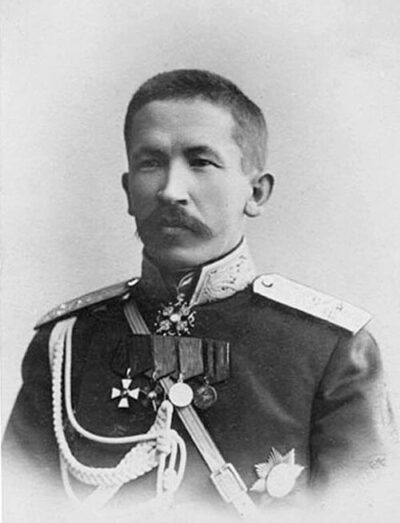 Lavr KornilovImperial Russian Army general (1870–1918)
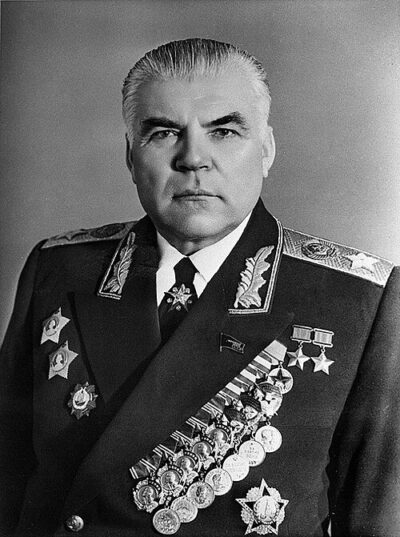 Rodion Malinovsky (1914–1917)Soviet military commander
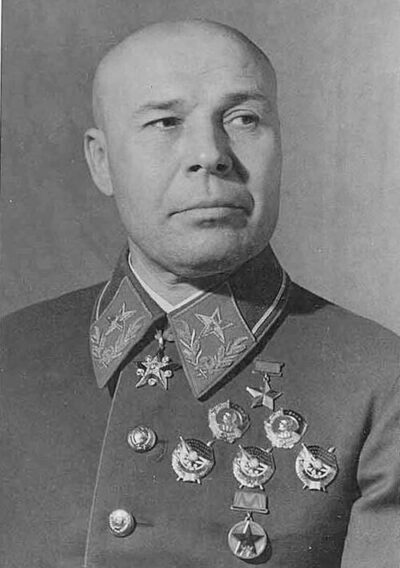 Semyon TimoshenkoSoviet military commander (1895-1970)
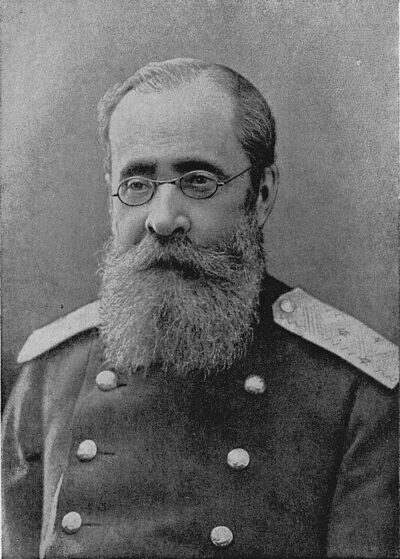 César CuiRussian composer and army officer
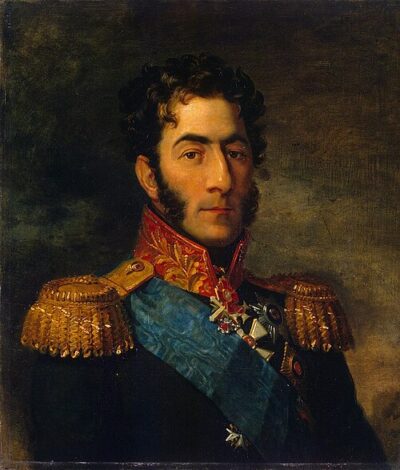 Pyotr BagrationGeneral of the Imperial Russian Army (1765–1812)
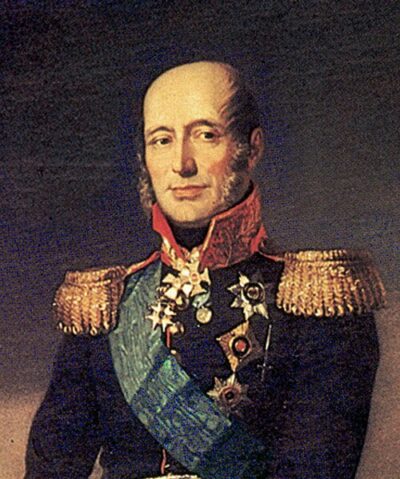 Michael Andreas Barclay de TollyBaltic German general (1761-1818)
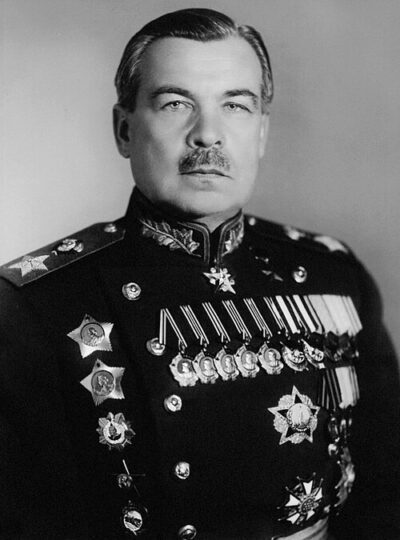 Leonid Govorov (1916–1918)Soviet marshal (1897–1955)
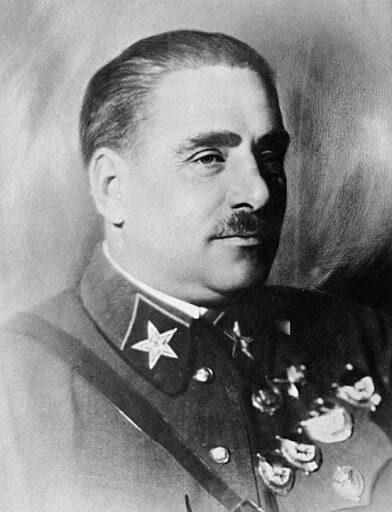 Vasily BlyukherSoviet marshal (1889–1938)
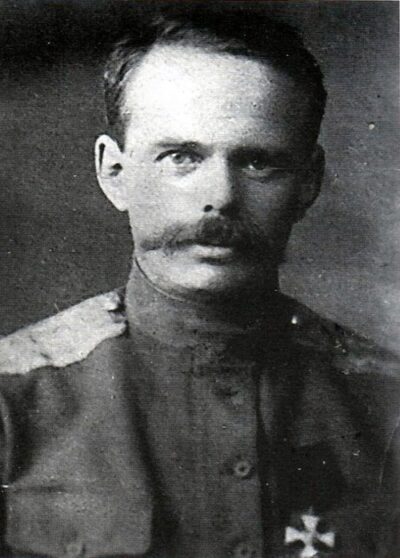 Roman von Ungern-SternbergAustrian anti-communist general (1886-1921)
 Władysław Anders (1913–1917)Polish general, politician and national hero (1892–1970)
 Fyodor Ivanovich TolbukhinSoviet military commander and Marshal of the Soviet Union (1894-1949)
 Grand Duke Nicholas Nikolaevich of RussiaRussian general (1856-1929); son of Grand Duke Nicholas Nikolaevich the Elder and Duchess Alexandra of Oldenburg
 Ivan PaskevichRussian military leader (1782–1856)
 Mikhail SkobelevRussian general (1843–1882)
 Alexander SamsonovRussian general (1859–1914)
and 13 more
Worked here
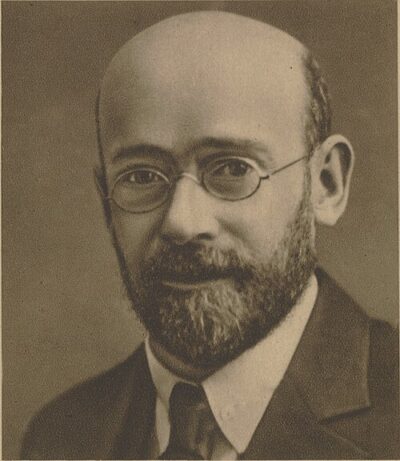 Janusz KorczakPolish-Jewish educator and physician (1878–1942)
 Józef Maria Hoene-Wroński (1795–1797)Polish philosopher

