quantum mechanics
Quantum mechanics is a fundamental theory in physics describing the properties of nature on an atomic scale. It came out in 1900. It was created by Max Planck, Albert Einstein and Louis de Broglie.
- Released
- 1900
- Created by
- Max Planck
All 6 facts, and where they come from
Facts
6 facts · 0 confirmed by two sources · 3 cited · 3 from one source
Where this comes from
Papalocal keeps its own record. It started from these sources; what each one said is kept here as it was copied, so a change on their side never changes this page by itself. Tap one to read its version.
What Wikidata says · copied November 16, 2026 · revision 2567829405
- Described as
- fundamental theory in physics describing the properties of nature on an atomic scale
- Other names
- quantum theory, wave mechanical model, matrix mechanics, QM
- What it is
- physical theory · 1 reference; branch of mechanics · 1 reference
- Created by
- Max Planck · 1 reference; Albert Einstein; Louis de Broglie
- Released
- 1900
- Wikipedias with a page
- 176
Wikidata item Q944 (wikidata.org/wiki/Q944), public domain (CC0). Copied 2026-11-16.
What Wikipedia says · copied November 16, 2026 · revision 1384896294
Quantum mechanics, also known as quantum physics, is the fundamental physical theory that describes the behavior of matter and of light; the behaviors it models typically occur at and below the scale of atoms, and have often been described as counterintuitive. Its concepts and methods have been applied across many disciplines, including quantum chemistry, quantum biology, quantum field theory, quantum technology, and quantum information science.
Quantum mechanics can describe many systems that classical physics cannot. Classical physics can describe many aspects of nature at an ordinary (macroscopic and (optical) microscopic) scale; however, it is insufficient for describing them at very small submicroscopic (atomic and subatomic) scales. Classical mechanics can be derived from quantum mechanics as an approximation that is valid at ordinary scales.
Quantum systems have bound states that are quantized to discrete values of energy, momentum, angular momentum, and other quantities, in contrast to classical systems where these quantities can be measured continuously. Measurements of quantum systems show characteristics of both particles and waves (wave–particle duality), and there are limits to how accurately the value of a physical quantity can be predicted prior to its measurement, given a complete set of initial conditions (the uncertainty principle).
Quantum mechanics arose gradually from theories to explain observations that could not be reconciled with classical physics, such as Max Planck's solution in 1900 to the black-body radiation problem, and the correspondence between energy and frequency in Albert Einstein's 1905 paper, which explained the photoelectric effect. These early attempts to understand microscopic phenomena, now known as the "old quantum theory", led to the full development of quantum mechanics in the mid-1920s by Niels Bohr, Erwin Schrödinger, Werner Heisenberg, Max Born, Paul Dirac and others. The modern theory is formulated in various specially developed mathematical formalisms. In one of them, a mathematical entity called the wave function provides information, in the form of probability amplitudes, about what measurements of a particle's energy, momentum, and other physical properties may yield.
From the Wikipedia article “Quantum mechanics” (en.wikipedia.org/wiki/Quantum_mechanics), by its contributors, under CC BY-SA 4.0 (creativecommons.org/licenses/by-sa/4.0/). Copied 2026-11-16; not changed.
Confirmed Two sources agree. Cited One source, and it names where it got it. One source One source, without a reference of its own. Sources disagree The sources disagree. We show the best-supported value and keep theirs below.
Picture: Wikimedia Commons: Ondaparticula.JPG · See Commons file page
People connected 15
Field
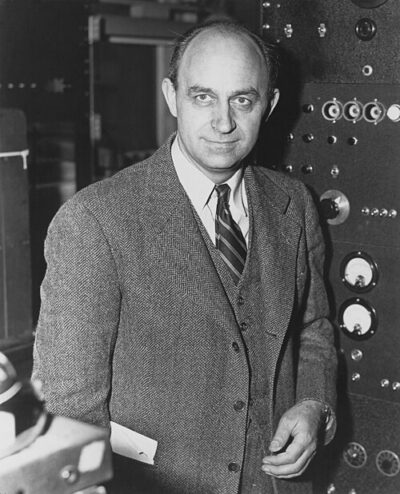 Enrico FermiItalian-American physicist (1901–1954)
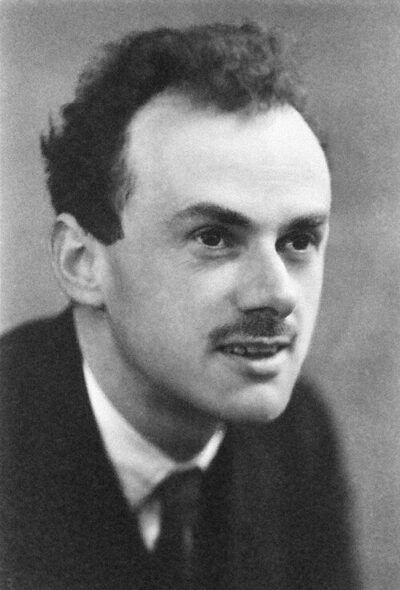 Paul DiracBritish theoretical physicist (1902–1984)
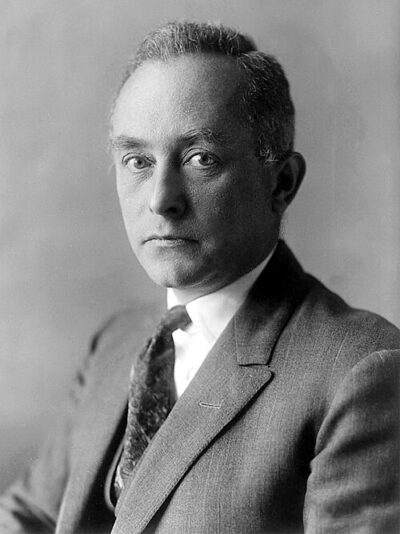 Max BornGerman-Jewish physicist and mathematician (1882–1970)
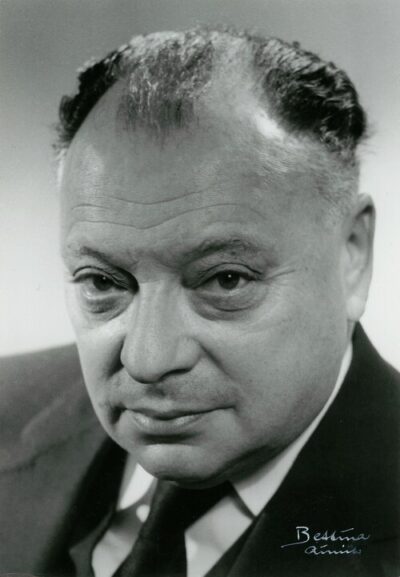 Wolfgang Pauliphysicist, Nobel prize winner (1900–1958)
 Maria Göppert MayerGerman-born American theoretical physicist (1906-1972)
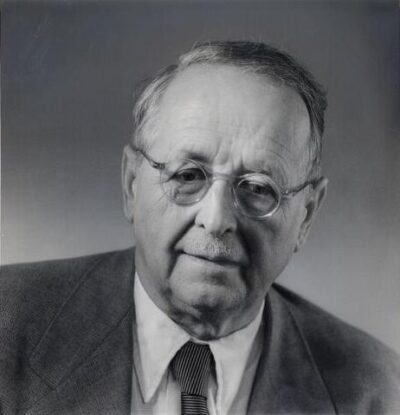 Hermann WeylGerman mathematician (1885–1955)
 David J. WinelandAmerican physicist
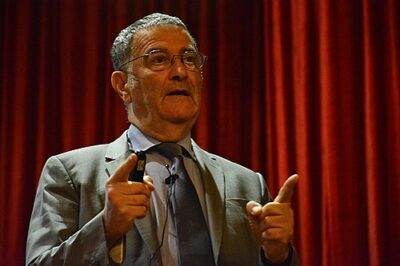 Serge HarocheFrench physicist, Nobel laureate
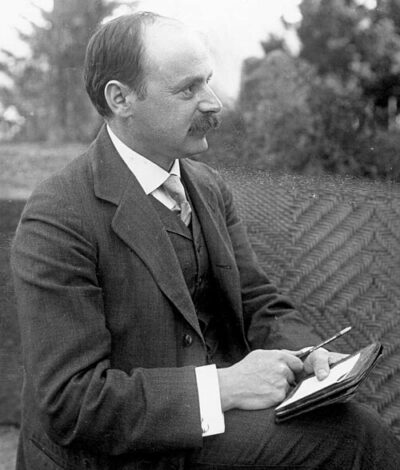 Karl SchwarzschildGerman physicist, astronomer and mathematician (1873–1916)
- HHugh Everett IIIUS physicist and discoverer of the relative-state interpretation of quantum mechanics
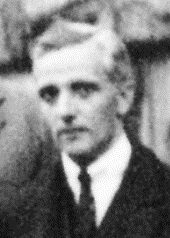 Léon BrillouinFrench physicist (1889-1969)
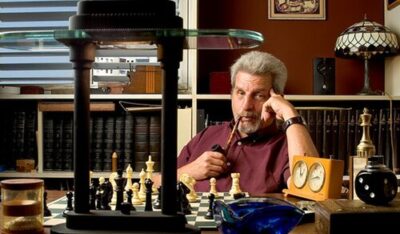 Yakir AharonovIsraeli physicist
 Leonard MlodinowAmerican physicist, author and screenwriter
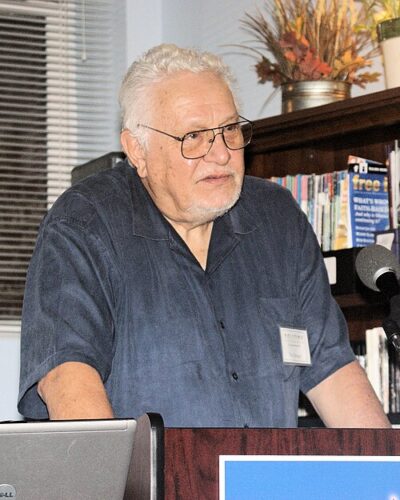 Victor J. StengerAmerican philosopher (1935–2014)