
Sylvester Medal
Sylvester Medal is a bronze medal awarded by the Royal Society (London). It was created in 1901. It is given by the Royal Society of London.
- Given by
- Royal Society of London
- Country
- United Kingdom
- Created
- 1901
All 6 facts, and where they come from
Facts
6 facts · 0 confirmed by two sources · 2 cited · 4 from one source
Where this comes from
Papalocal keeps its own record. It started from these sources; what each one said is kept here as it was copied, so a change on their side never changes this page by itself. Tap one to read its version.
What Wikidata says · copied November 17, 2026 · revision 2569435570
- Described as
- bronze medal awarded by the Royal Society (London)
- What it is
- award
- Created
- 1901 · 1 reference
- Country
- United Kingdom · 1 reference
- Given by
- Royal Society of London
- Named after
- James Joseph Sylvester
- Official website
- https://royalsociety.org/medals-and-prizes/sylvester-medal/
- Wikipedias with a page
- 26
Wikidata item Q899402 (wikidata.org/wiki/Q899402), public domain (CC0). Copied 2026-11-17.
What Wikipedia says · copied November 17, 2026 · revision 1386188861
The Sylvester Medal is a bronze medal awarded by the Royal Society for the encouragement of mathematical research, and accompanied by a £1,000 prize. It was named in honour of James Joseph Sylvester, the Savilian Professor of Geometry at the University of Oxford in the 1880s, and first awarded in 1901, having been suggested by a group of Sylvester's friends (primarily Raphael Meldola) after his death in 1897. Initially awarded every three years with a prize of around £900, the Royal Society have announced that starting in 2009 it will be awarded every two years instead, and is to be aimed at 'early to mid career stage scientist' rather than an established mathematician. The award winner is chosen by the Society's A-side awards committee, which handles physical rather than biological science awards.
As of 2021, 45 medals have been awarded, of which all but 10 have been awarded to citizens of the United Kingdom, two to citizens of France and United States, and one medal each has been won by citizens of New Zealand, Germany, Austria, Russia, Italy, Sweden and South Africa. As of 2021 three women have won the medal, Mary Cartwright in 1964, Dusa McDuff in 2018, and Frances Kirwan in 2021.
From the Wikipedia article “Sylvester Medal” (en.wikipedia.org/wiki/Sylvester_Medal), by its contributors, under CC BY-SA 4.0 (creativecommons.org/licenses/by-sa/4.0/). Copied 2026-11-17; not changed.
Confirmed Two sources agree. Cited One source, and it names where it got it. One source One source, without a reference of its own. Sources disagree The sources disagree. We show the best-supported value and keep theirs below.
People connected 18
Won it
 Martin Hairer (2025)Austrian-British mathematician working in stochastic analysis
 Dusa McDuff (2018)English American mathematician
 Timothy Gowers (2016)British mathematician
 Lennart Carleson (2003)Swedish mathematician
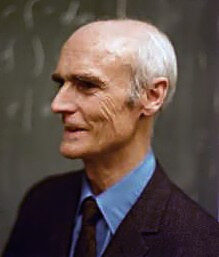 Harold Scott MacDonald Coxeter (1997)Canadian mathematician (1907–2003)
- KKlaus Roth (1991)British mathematician (1925–2015)
 John G. Thompson (1985)American mathematician
 Mary Cartwright (1964)British mathematician (1900–1998)
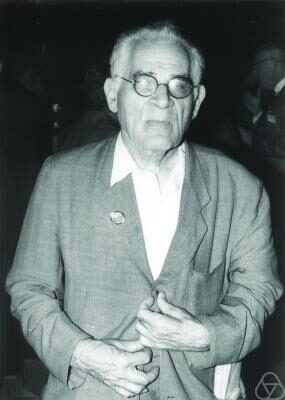 Louis J. Mordell (1949)American-born British number theorist (1888–1972)
 John Edensor Littlewood (1943)English mathematician (1885–1977)
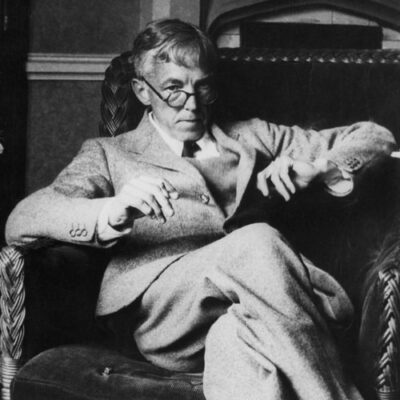 G.H. Hardy (1940)British mathematician (1877–1947)
 Bertrand Russell (1934)British philosopher and logician (1872–1970)
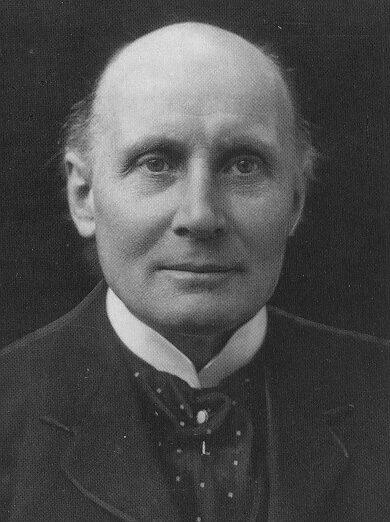 Alfred North Whitehead (1925)English mathematician and philosopher (1861–1947)
 Tullio Levi-Civita (1922)Italian mathematician and physicist (1873–1941)
 Jean Gaston Darboux (1916)French mathematician (1842–1917)
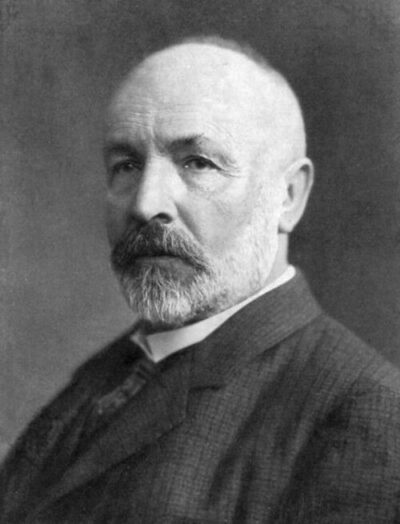 Georg Cantor (1904)German mathematician, inventor of set theory (1845–1918)
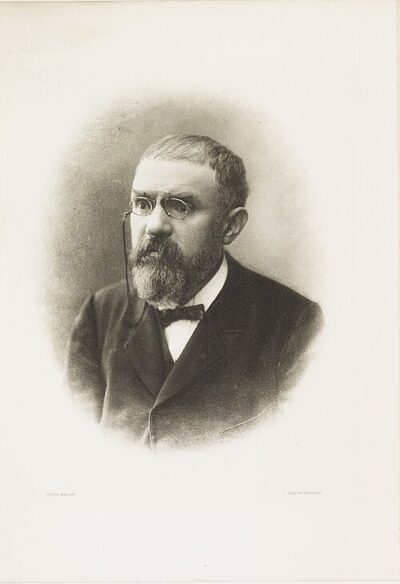 Henri Poincaré (1901)French mathematician, physicist and engineer (1854–1912)
 Peter SarnakSouth African mathematician
