
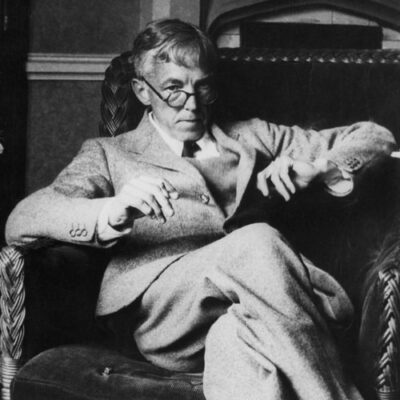
G.H. Hardy
G.H. Hardy was a British mathematician. Born February 7, 1877, in Cranleigh. Died December 1, 1947, in Nuffield Health Cambridge Hospital. Positions held include chairperson (1924–1925). Known for Hardy–Weinberg principle, Hardy hierarchy and Hardy space. Educated at Trinity College and Cranleigh School. Awards include Fellow of the Royal Society, Copley Medal and Royal Medal.
Facts
48 facts · 2 confirmed by two sources · 17 cited · 29 from one source
Where this comes from
Papalocal keeps its own record. It started from these sources; what each one said is kept here as it was copied, so a change on their side never changes this page by itself. Tap one to read its version.
What Wikidata says · copied November 16, 2026 · revision 2557888846
- Described as
- British mathematician (1877–1947)
- Other names
- G. H. Hardy, Godfrey Harold Hardy, Godfrey·Harold·Hardy, Godfrey Harold
- Born
- February 7, 1877 · 11 references
- Died
- December 1, 1947 · 13 references
- Born in
- Cranleigh · 4 references
- Died in
- Nuffield Health Cambridge Hospital · 1 reference
- Buried in
- Trinity College Chapel · 1 reference
- Citizen of
- United Kingdom
- Occupation
- mathematician · 2 references; university teacher
- Positions held
- chairperson (1924–1925) · 1 reference
- Worked for
- University of Cambridge (2 times) (1900–1945) · 1 reference; University of Oxford (1919–1931) · 1 reference
- Education
- Trinity College (1896–1898) · 1 reference; Cranleigh School (–1889) · 1 reference; Winchester College (1890–1896) · 1 reference; University of Cambridge · 1 reference
- Member of
- Royal Society of London (1910–); German Academy of Sciences Leopoldina; Royal Swedish Academy of Sciences; French Academy of Sciences; American Academy of Arts and Sciences; Royal Prussian Academy of Sciences; National Academy of Sciences (1927–); Russian Academy of Sciences (1924–) · 1 reference; Bloomsbury Group · 1 reference; Göttingen Academy of Sciences and Humanities in Lower Saxony
- Known for
- Hardy–Weinberg principle; Hardy hierarchy; Hardy space; Hardy's inequality; Hardy's theorem; Hardy field; First Hardy–Littlewood conjecture; Second Hardy–Littlewood conjecture; Hardy–Littlewood circle method; Hardy–Littlewood inequality
- Awards
- Fellow of the Royal Society (1910) · 1 reference; Copley Medal (1947) · 1 reference; Royal Medal (1920); De Morgan Medal (1929); Josiah Willard Gibbs Lectureship (1928); Chauvenet Prize (1932) · 1 reference; Sylvester Medal (1940) · 1 reference; Smith's Prize (1901)
- Field
- mathematical analysis · 1 reference; number theory · 1 reference; mathematics · 1 reference; calculus · 1 reference; pure mathematics · 1 reference
- Wikipedias with a page
- 85
Wikidata item Q184337 (wikidata.org/wiki/Q184337), public domain (CC0). Copied November 16, 2026.
What Wikipedia says · copied November 16, 2026 · revision 1385903729
Godfrey Harold Hardy (7 February 1877 – 1 December 1947) was an English mathematician, known for his achievements in number theory and mathematical analysis. In biology, he is known for the Hardy–Weinberg principle, a basic principle of population genetics.
Hardy is famed for his 1940 essay A Mathematician's Apology, often considered one of the best insights into the mind of a working mathematician written for the layperson. The novelist Graham Greene ranked it with the notebooks of Henry James as "the best account of what it was like to be a creative artist."Starting in 1914, Hardy was the mentor of the Indian mathematician Srinivasa Ramanujan, a relationship that has become celebrated. Hardy almost immediately recognised Ramanujan's extraordinary, albeit untutored, brilliance, and Hardy and Ramanujan became close collaborators. When asked by a young Paul Erdős what his greatest contribution to mathematics was, Hardy unhesitatingly replied that it was the discovery of Ramanujan. He remarked that on a scale of mathematical ability, his ability would be 25, Littlewood would be 30, Hilbert would be 80, and Ramanujan would be 100.
In a lecture on Ramanujan, Hardy said that "my association with him is the one romantic incident in my life".
- Born, in its opening lines
- February 7, 1877
- Died, in its opening lines
- December 1, 1947
From the Wikipedia article “G. H. Hardy” (en.wikipedia.org/wiki/G._H._Hardy), by its contributors, under CC BY-SA 4.0 (creativecommons.org/licenses/by-sa/4.0/). Copied November 16, 2026; not changed.
Confirmed Two sources agree. Cited One source, and it names where it got it. One source One source, without a reference of its own. Sources disagree The sources disagree. We show the best-supported value and keep theirs below.
