
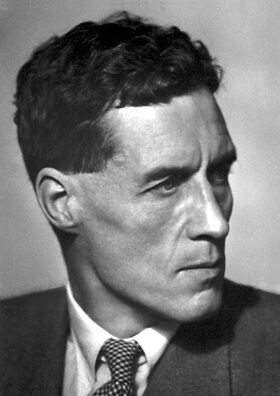
Patrick Blackett
Patrick Blackett was a British physicist. Born November 18, 1897, in London. Died July 13, 1974, in London. Positions held include President of the Royal Society (1965–1970), member of the House of Lords (1969–1974) and Langworthy Professor (1937–1953). Educated at Magdalene College and King's College. Awards include Fellow of the Royal Society, Copley Medal and Royal Medal.
Facts
47 facts · 2 confirmed by two sources · 14 cited · 31 from one source
Where this comes from
Papalocal keeps its own record. It started from these sources; what each one said is kept here as it was copied, so a change on their side never changes this page by itself. Tap one to read its version.
What Wikidata says · copied November 16, 2026 · revision 2567933479
- Described as
- British physicist (1897-1974)
- Other names
- Patrick Maynard Stuart Blackett, Patrick Blackett, Baron Blackett
- Born
- November 18, 1897 · 12 references
- Died
- July 13, 1974 · 11 references
- Born in
- London · 3 references
- Died in
- London · 2 references
- Buried in
- Kensal Green Cemetery · 1 reference
- Citizen of
- United Kingdom; United Kingdom of Great Britain and Ireland (–1927)
- Occupation
- politician · 1 reference; physicist · 1 reference; university teacher; nuclear physicist
- Positions held
- President of the Royal Society (1965–1970) · 1 reference; member of the House of Lords (1969–1974); Langworthy Professor (1937–1953)
- Political party
- Labour Party
- Worked for
- University of Manchester; Imperial College London; Birkbeck, University of London; Victoria University of Manchester · 1 reference
- Education
- Magdalene College; King's College; University of Cambridge · 1 reference
- Member of
- Royal Society of London (1933–); German Academy of Sciences at Berlin; German Academy of Sciences Leopoldina; Academy of Sciences of the USSR; American Academy of Arts and Sciences; National Academy of Sciences (1966–); Fabian Society; Manchester Literary and Philosophical Society; Accademia Nazionale dei Lincei (1965–) · 1 reference
- Awards
- Fellow of the Royal Society; Copley Medal (1956) · 1 reference; Royal Medal (1940); Nobel Prize in Physics (1948) · 2 references; Royal Society Bakerian Medal (1939) · 1 reference; Guthrie Lecture (1940) · 1 reference; Order of Merit (1967); Dalton Medal (1948); honorary doctorate from the University of Strasbourg (1947) · 1 reference
- Field
- physics
- Spouse
- Costanza Bayon (1924–) · 1 reference
- Children
- Giovanna Blackett · 1 reference; Nicolas Blackett · 1 reference
- Father
- Arthur Stuart Blackett · 1 reference
- Mother
- Caroline Frances Maynard · 1 reference
- Siblings
- Marion Milner
- Wikipedias with a page
- 75
Wikidata item Q184499 (wikidata.org/wiki/Q184499), public domain (CC0). Copied November 16, 2026.
What Wikipedia says · copied November 16, 2026 · revision 1379232195
Patrick Maynard Stuart Blackett, Baron Blackett of Chelsea (18 November 1897 – 13 July 1974), was a British experimental physicist and life peer who received the 1948 Nobel Prize in Physics. In 1925, he was the first person to prove that radioactivity could cause the nuclear transmutation of one chemical element to another. He also made major contributions to the Allied war effort in World War II, advising on military strategy and developing operational research.
In the war's aftermath, Blackett continued his scientific work, but also became outspoken on political matters. He advocated for restraints on the military use of atomic energy. He was a proponent for Third World development and for reducing the gap between rich and poor. In the 1950s and '60s, he was a key advisor to the Labour Party on science and technology policy. By the time of his death in 1974, Blackett had become controversial to the point that the Times obituary referred to him as the "Radical Nobel-Prize Winning Physicist."
- Born, in its opening lines
- November 18, 1897
- Died, in its opening lines
- July 13, 1974
From the Wikipedia article “Patrick Blackett” (en.wikipedia.org/wiki/Patrick_Blackett), by its contributors, under CC BY-SA 4.0 (creativecommons.org/licenses/by-sa/4.0/). Copied November 16, 2026; not changed.
Confirmed Two sources agree. Cited One source, and it names where it got it. One source One source, without a reference of its own. Sources disagree The sources disagree. We show the best-supported value and keep theirs below.
