
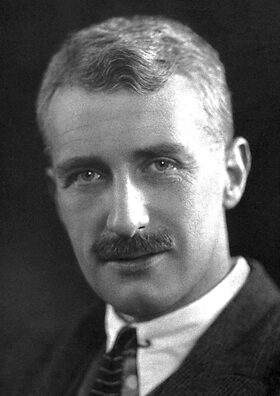
Archibald Hill
Archibald Hill was an English physiologist and biophysicist. Born September 26, 1886, in Bristol. Died June 3, 1977, in Cambridge. Positions held include member of the 37th Parliament of the United Kingdom (1940–1945). Educated at Trinity College and Trinity Hall. Awards include Officer of the Order of the British Empire, Faraday Medal and Prize and Companion of Honour.
Facts
54 facts · 2 confirmed by two sources · 21 cited · 31 from one source
Where this comes from
Papalocal keeps its own record. It started from these sources; what each one said is kept here as it was copied, so a change on their side never changes this page by itself. Tap one to read its version.
What Wikidata says · copied November 16, 2026 · revision 2567883443
- Described as
- English physiologist and biophysicist (1886-1977)
- Other names
- A. V. Hill, Sir Archibald Hill, Archibald Vivian Hill
- Born
- September 26, 1886 · 11 references
- Died
- June 3, 1977 · 11 references
- Born in
- Bristol · 1 reference
- Died in
- Cambridge · 1 reference
- Name at birth
- Archibald Vivian Hill
- Citizen of
- United Kingdom
- Occupation
- politician · 1 reference; mathematician; physician · 1 reference; physiologist · 1 reference; biophysicist · 1 reference
- Positions held
- member of the 37th Parliament of the United Kingdom (1940–1945) · 1 reference
- Worked for
- University College London; University of Cambridge; Victoria University of Manchester · 1 reference
- Education
- Trinity College; Trinity Hall; University of Cambridge (1909–) · 1 reference; Blundell's School; School of Medicine, University of Manchester
- Member of
- Royal Society of London; Saxon Academy of Sciences and Humanities (1929–); German Academy of Sciences Leopoldina (1925–) · 1 reference; Royal Swedish Academy of Sciences; Accademia Nazionale dei Lincei (1929–) · 1 reference; American Academy of Arts and Sciences; Académie Nationale de Médecine; National Academy of Sciences (1941–); Romanian Academy; American Philosophical Society (1938–)
- Awards
- Officer of the Order of the British Empire; Faraday Medal and Prize · 1 reference; Companion of Honour · 1 reference; Nobel Prize in Physiology or Medicine (1922) · 2 references; Royal Medal (1926); Croonian Medal and Lecture (1926); Baly Medal (1927); Actonian Prize (1928); Guthrie Lecture (1938) · 1 reference; doctor honoris causa from the University of Alger (1944) · 1 reference; honorary doctor of the University of Toulouse (1948) · 2 references; Copley Medal (1948) · 1 reference; Cothenius Medal (1966); Bayliss-Starling Prize Lecture (1969) · 1 reference
- Field
- physiology
- Spouse
- Margaret Neville Keynes · 1 reference
- Children
- Polly Hill · 1 reference; David Keynes Hill · 1 reference; Maurice Hill · 1 reference; Janet Hill · 2 references
- Father
- Jonathan Hill · 1 reference
- Mother
- Ada Priscilla Rumney · 1 reference
- Siblings
- Muriel Hill · 1 reference
- Military branch
- British Army
- Wikipedias with a page
- 66
Wikidata item Q155375 (wikidata.org/wiki/Q155375), public domain (CC0). Copied November 16, 2026.
What Wikipedia says · copied November 16, 2026 · revision 1384463751
Archibald Vivian Hill (26 September 1886 – 3 June 1977), better known to friends and colleagues as A. V. Hill, was a British physiologist, one of the founders of the diverse disciplines of biophysics and operations research. He shared the 1922 Nobel Prize in Physiology or Medicine for his elucidation of the production of heat and mechanical work in muscles.
- Born, in its opening lines
- September 26, 1886
- Died, in its opening lines
- June 3, 1977
From the Wikipedia article “Archibald Hill” (en.wikipedia.org/wiki/Archibald_Hill), by its contributors, under CC BY-SA 4.0 (creativecommons.org/licenses/by-sa/4.0/). Copied November 16, 2026; not changed.
Confirmed Two sources agree. Cited One source, and it names where it got it. One source One source, without a reference of its own. Sources disagree The sources disagree. We show the best-supported value and keep theirs below.
