
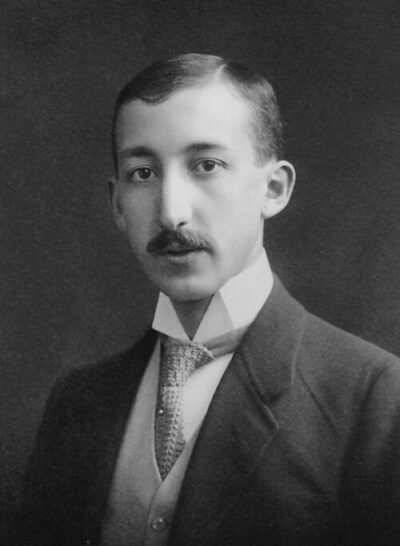
George de Hevesy
George de Hevesy was a Hungarian chemist. Born August 1, 1885, in Budapest. Died July 5, 1966, in Freiburg im Breisgau. Positions held include professor. Educated at University of Freiburg and Eötvös Loránd University. Awards include Niels Bohr International Gold Medal, Copley Medal and Faraday Lectureship Prize.
Facts
41 facts · 2 confirmed by two sources · 10 cited · 29 from one source
Where this comes from
Papalocal keeps its own record. It started from these sources; what each one said is kept here as it was copied, so a change on their side never changes this page by itself. Tap one to read its version.
What Wikidata says · copied November 16, 2026 · revision 2570043612
- Described as
- Hungarian chemist (1885–1966)
- Other names
- George Charles de Hevesy, György Bischitz
- Born
- August 1, 1885 · 11 references
- Died
- July 5, 1966 · 10 references
- Born in
- Budapest · 2 references
- Died in
- Freiburg im Breisgau · 2 references
- Buried in
- Fiume Road Graveyard
- Citizen of
- Hungary; Sweden
- Occupation
- chemist · 1 reference; university teacher
- Positions held
- professor
- Worked for
- University of Freiburg; Eötvös Loránd University; ETH Zurich; University of Copenhagen Niels Bohr Institute; University of Manchester; University of Copenhagen; Stockholm University
- Education
- University of Freiburg (–1908); Eötvös Loránd University (–1904); Technische Universität Berlin · 1 reference; Piarist Gymnasium of Budapest (–1903)
- Member of
- Royal Society of London; German Academy of Sciences Leopoldina · 1 reference; Royal Swedish Academy of Sciences; Hungarian Academy of Sciences; Heidelberg Academy of Sciences and Humanities (1929–) · 1 reference; Polish Academy of Learning; Pontifical Academy of Sciences · 1 reference; American Academy of Arts and Sciences; Accademia Nazionale dei Lincei (1947–) · 1 reference
- Awards
- Niels Bohr International Gold Medal (1961); Copley Medal (1949) · 1 reference; Faraday Lectureship Prize (1950); Pour le Mérite for Sciences and Arts order (1952); Nobel Prize in Chemistry (1943) · 2 references; Foreign Member of the Royal Society (1939) · 1 reference; Baly Medal (1951); honorary doctorate of the University of Copenhagen (1950) · 1 reference; honorary doctor of the University of Freiburg (1948) · 1 reference
- Field
- chemistry
- Siblings
- Paul de Hevesy
- Wikipedias with a page
- 67
Wikidata item Q76951 (wikidata.org/wiki/Q76951), public domain (CC0). Copied November 16, 2026.
What Wikipedia says · copied November 16, 2026 · revision 1366380006
George Charles de Hevesy (born György Bischitz; Hungarian: Hevesy György Károly; German: Georg Karl von Hevesy; 1 August 1885 – 5 July 1966) was a Hungarian radiochemist and Nobel Prize in Chemistry laureate, recognized in 1943 for his key role in the development of radioactive tracers to study chemical processes such as in the metabolism of animals. He also co-discovered the element hafnium.
- Born, in its opening lines
- August 1, 1885
- Died, in its opening lines
- July 5, 1966
From the Wikipedia article “George de Hevesy” (en.wikipedia.org/wiki/George_de_Hevesy), by its contributors, under CC BY-SA 4.0 (creativecommons.org/licenses/by-sa/4.0/). Copied November 16, 2026; not changed.
Confirmed Two sources agree. Cited One source, and it names where it got it. One source One source, without a reference of its own. Sources disagree The sources disagree. We show the best-supported value and keep theirs below.
