
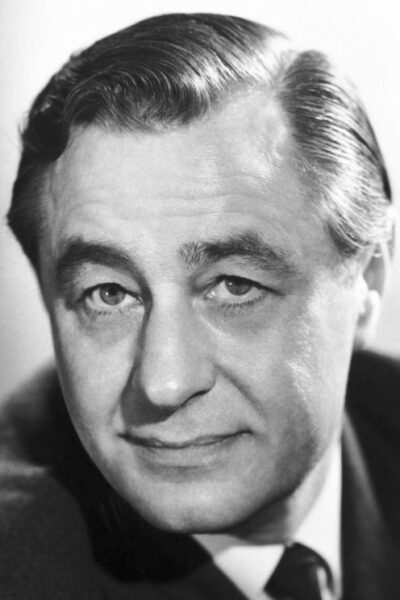
George Porter
George Porter was a British chemist. Born December 6, 1920, in Stainforth. Died August 31, 2002, in Canterbury. Positions held include President of the Royal Society (1985–1990) and member of the House of Lords (1990–2002). Educated at University of Leeds and Emmanuel College. Awards include Knight Bachelor, Order of Merit and Melchett Medal.
Facts
51 facts · 2 confirmed by two sources · 21 cited · 28 from one source
Where this comes from
Papalocal keeps its own record. It started from these sources; what each one said is kept here as it was copied, so a change on their side never changes this page by itself. Tap one to read its version.
What Wikidata says · copied November 16, 2026 · revision 2569081910
- Described as
- British chemist (1920–2002)
- Other names
- George Porter, Baron Porter of Luddenham
- Born
- December 6, 1920 · 10 references
- Died
- August 31, 2002 · 9 references
- Born in
- Stainforth · 3 references
- Died in
- Canterbury · 2 references
- Citizen of
- United Kingdom · 3 references
- Occupation
- chemist · 3 references; politician · 1 reference; university teacher
- Positions held
- President of the Royal Society (1985–1990) · 1 reference; member of the House of Lords (1990–2002)
- Worked for
- University of Sheffield; University College London; Imperial College London; University of Cambridge
- Education
- University of Leeds; Emmanuel College; University of Cambridge; Trinity Academy
- Member of
- Royal Society of London (1960–); German Academy of Sciences Leopoldina · 1 reference; Pontifical Academy of Sciences · 1 reference; Hungarian Academy of Sciences; American Academy of Arts and Sciences; Russian Academy of Sciences; Indian National Science Academy; American Philosophical Society · 1 reference; National Academy of Sciences (1974–); Göttingen Academy of Sciences and Humanities in Lower Saxony
- Awards
- Knight Bachelor; Order of Merit; Melchett Medal; Faraday Lectureship Prize (1950); Corday-Morgan Prize (1955) · 1 reference; Tilden Prize (1958) · 1 reference; Fellow of the Royal Society (1960); Remsen Award (1962) · 1 reference; Nobel Prize in Chemistry (1967) · 2 references; Liversidge Award (1969) · 1 reference; Davy Medal (1971) · 1 reference; Kalinga Prize (1976) · 1 reference; Royal Society Bakerian Medal (1977) · 1 reference; Rumford Medal (1978) · 1 reference; Longstaff Prize (1981) · 1 reference
- Field
- chemistry; physical chemistry; chemical kinetics
- Spouse
- Stella Jean Brooke (1949–) · 1 reference
- Children
- John Brooke Porter · 1 reference; Andrew Christopher George Porter · 1 reference
- Father
- John Smith Porter · 1 reference
- Mother
- Alice Ann Roebuck · 1 reference
- Wikipedias with a page
- 62
Wikidata item Q106762 (wikidata.org/wiki/Q106762), public domain (CC0). Copied November 16, 2026.
What Wikipedia says · copied November 16, 2026 · revision 1385724647
George Porter, Baron Porter of Luddenham, (6 December 1920 – 31 August 2002) was a British chemist known for his work on flash photolysis who was Chancellor of the University of Leicester and President of the Royal Society. He was awarded the Nobel Prize in Chemistry in 1967.
- Born, in its opening lines
- December 6, 1920
- Died, in its opening lines
- August 31, 2002
From the Wikipedia article “George Porter” (en.wikipedia.org/wiki/George_Porter), by its contributors, under CC BY-SA 4.0 (creativecommons.org/licenses/by-sa/4.0/). Copied November 16, 2026; not changed.
Confirmed Two sources agree. Cited One source, and it names where it got it. One source One source, without a reference of its own. Sources disagree The sources disagree. We show the best-supported value and keep theirs below.
